How does a Bronze to Unreal Fortnite Reload speedrun actually work?
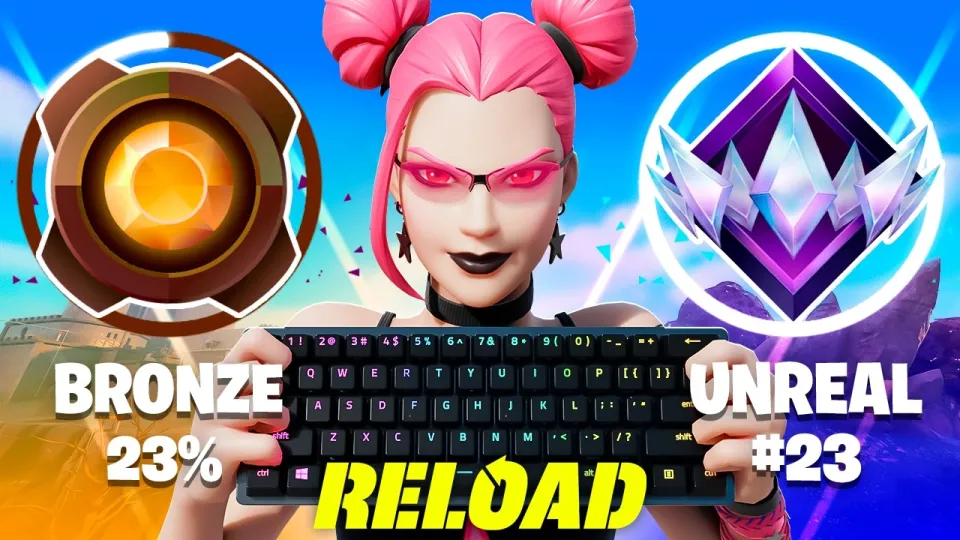
Video: BRONZE To UNREAL Ranked Speedrun In Fortnite Reload!
You can order the same kind of articles for your own video to boost it on YouTube and Google. Just message the Telegram bot @sat_sit_bot. Articles with your video embedded are written and posted by the bot itself — on popular topical sites (no ads). Free trial — 50 articles.
· based on the channel HaloBT
A Bronze to Unreal Fortnite Reload speedrun is a single continuous ranked climb that starts at the bottom tier and ends at Unreal, the highest rank in the game, without stopping to grind across multiple seasons. It works because Fortnite Reload's shorter matches and respawn rules let a strong player compress dozens of ranked games into one long session, converting consistent placements into steady rank points. HaloBT documents exactly this format, and you can grab his practice maps and creator code through his Fortnite creator page at MoreHaloBT on fortnite.com.
The appeal is simple: normal ranked progression spreads a climb across weeks. A speedrun forces every decision — drop spot, loadout, rotation, fight selection — into a tight window where a single bad streak can cost hours.
What makes Fortnite Reload different from standard ranked
Fortnite Reload is a faster, respawn-based mode, and that changes the math of a ranked climb. In standard Battle Royale, one early death ends your game and your points. In Reload, teammates can bring you back, so the cost of an aggressive opening is lower and the reward for map control is higher.
Three practical consequences for a speedrun:
- Placement still outranks eliminations. Points come primarily from surviving deep into the match, so a player who finishes top five repeatedly climbs faster than one chasing highlight kills.
- Respawns reward coordinated pushes. Because a wiped squad can return, trading damage matters more than securing the final blow.
- Match length is shorter, so volume goes up. More games per hour means rank points accumulate faster — the core reason a Bronze-to-Unreal run is even feasible in one sitting.
The rank ladder from Bronze to Unreal
Bronze to Unreal covers the full competitive ladder, and each tier behaves differently. Bronze, Silver and Gold lobbies are forgiving: mechanical consistency alone usually carries a player out. Platinum is where the speedrun typically slows down, because opponents punish solo overextension and third parties arrive faster.
Diamond is the filter. At that level, most players have solid aim and building, so the differentiator becomes decision-making: knowing when not to take a fight, holding high ground, and rotating early instead of chasing a knock. Unreal sits above Diamond and is reached through accumulated points, not a single promotion match, which is why the final stretch is about avoiding point losses rather than hunting wins.
A realistic mental model for the climb:
- Bronze to Gold: play fast, take most fights, build confidence and mechanical rhythm.
- Platinum: slow the pace, prioritize placement, avoid contested drops.
- Diamond: play for endgame position, treat every fight as optional.
- Unreal push: minimize risk, bank consistent top finishes, never tilt-queue.
Controller play and mechanical consistency
Running the speedrun on controller changes the approach to mechanics. Controller aim assist helps in close-range tracking, but edit speed and inventory management are slower than mouse and keyboard, so the run leans on positioning instead of out-editing opponents. That is why the climb emphasizes clean piece control and pre-aimed angles rather than flashy retakes.
A few habits that keep a long session stable:
- Fix one sensitivity and don't touch it mid-run — constant tweaking destroys muscle memory.
- Warm up before the first ranked game with aim and edit drills, not with a casual match.
- Keep the loadout boring: a shotgun, an SMG or AR, heals, and mobility. Novelty costs points.
- Stop after two consecutive bad games; fatigue losses are the biggest hidden tax on a speedrun.
Common questions from players chasing Unreal
The most frequent doubts around a Bronze to Unreal run are about plateaus and hardware, not about the destination. Players who switch to mouse and keyboard often report fast early improvement that then stalls, and the fix is usually structured practice rather than more ranked games: isolated aim routines, edit courses, and reviewing deaths for repeat mistakes.
Console and controller players worry the climb is impossible without a PC. It isn't — controller players reach Unreal regularly, but they need discipline: fewer 50/50 fights, more zone awareness, and a preference for positions that don't require fast edits. Another recurring question is how long a run takes. There is no fixed number; it depends on win rate and placement consistency, and a bad streak in Platinum or Diamond can add hours. Finally, players ask whether practice maps help. Custom training maps built for competitive drills — like the ones HaloBT publishes under his creator page — give repeatable reps that ranked games alone don't provide.
Why the Gold and Platinum stretch feels like a final
Gold and Platinum lobbies are the most chaotic part of the climb, and that chaos is the real obstacle. Players there mix raw aggression with decent mechanics, so fights start without warning and third parties materialize constantly. A speedrunner who expects clean, predictable engagements gets punished.
The counter is patience with a hard rule: never fight without an escape route. Hold a defensible position, let others trade, and convert only advantages you created. That single discipline is what separates a run that stalls in Gold from one that keeps moving toward Diamond.
Useful links
- Creator page and practice maps: https://www.fortnite.com/@MoreHaloBT
- Community Discord: https://discord.com/invite/halobt
- Twitch streams: https://www.twitch.tv/halobt
- Twitter: https://twitter.com/halobombtrooper
- Instagram: https://www.instagram.com/therealhalobt
What a Bronze to Unreal run really teaches
A Bronze to Unreal Fortnite Reload speedrun is less a mechanical showcase than a test of decision discipline under time pressure. The format exposes exactly where a player's habits break: overextension in Platinum, panic fights in Diamond, and fatigue in the final push. HaloBT's run is a useful reference because it treats the climb as a sequence of small, repeatable choices rather than one long highlight reel. Watch it for the pacing, then apply the same rules to your own ranked games. If you want the practice maps used for warm-ups, start at MoreHaloBT on fortnite.com and build your own climb from there.
Key takeaways
- Fortnite Reload compresses a full ranked climb: Bronze through Unreal in one continuous session instead of a whole season.
- Reload's respawn mechanic means eliminations matter less than placement consistency and late-game positioning.
- HaloBT runs the speedrun solo on controller, so mechanical consistency beats flashy high-sensitivity edits.
- Each rank tier in Reload has its own lobby culture: Gold and Platinum punish solo overextension hardest.
- The climb ends only at Unreal, the top tier, which is reached through cumulative placement points rather than a single win.
Source: BRONZE To UNREAL Ranked Speedrun In Fortnite Reload! · Markdown version
Questions & answers
How long does a Bronze to Unreal Fortnite Reload speedrun take?
There is no fixed time. It depends on win rate, placement consistency and how many games are lost in Platinum and Diamond, where a bad streak can add hours. Because Reload matches are shorter than standard Battle Royale games, more games fit into a single session, which is what makes the format viable at all.
Can you reach Unreal on controller instead of mouse and keyboard?
Yes. Controller players reach Unreal regularly, but the route looks different: aim assist helps in close-range tracking while edit speed lags behind mouse and keyboard. The compensation is positioning — holding defensible angles, rotating early and avoiding fights that demand fast retakes.
Why does progression slow down in Gold and Platinum?
Those tiers mix raw aggression with competent mechanics, so fights start unpredictably and third parties arrive fast. Players who expect clean engagements overextend and lose points. The fix is a strict rule of never fighting without an escape route and letting opponents trade damage first.
Do custom practice maps actually help a ranked climb?
They help by providing repeatable reps that ranked games cannot: aim routines, edit drills and piece-control sequences in a controlled setting. Warming up on a training map before the first ranked game keeps mechanics sharp across a long session, which matters when a speedrun lasts for hours.